Registered Nonprofit
Association for the Support
of Children and Needy
People Around the World
Unterstützung
Thu, 15.01.2026 - 15:04
Support for Refugees in Jordan
Travel Report – Jordan, November 8–14, 2025
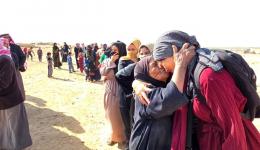
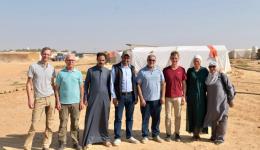
In November, the FriendCircle WorldHelp team is once again on the move – this time traveling to Jordan. Departing from Frankfurt, Alexandra, Michael, Jürgen, and Alois fly to Amman to gain a first-hand impression of the situation on the ground. In refugee camps as well as during visits with families and individuals, they take time for personal conversations, listen carefully, and gain an immediate understanding of the often difficult living conditions. Based on this, assistance is provided in a targeted and individual manner.
The impressions from this journey are intense and deeply moving. Alois has documented the tour to Jordan in detail. His report below offers a profound insight into the encounters, challenges, and hopes on site.
Report by Alois:
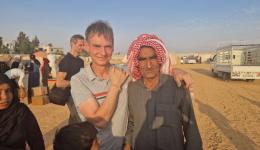
On November 8, 2025, Alexandra, Michael, Jürgen, and Alois from FriendCircle WorldHelp travel to Jordan to provide direct aid in various refugee camps. We meet our friend and companion Ahmad in the capital city of Amman. From there, we will visit several refugee camps near the Syrian border over the coming days.
In the Bekaa region, there are 127 camps with approximately 6,500 families. Since 2011, around 1.4 million refugees from Syria have been displaced to Jordan. The refugee camps were initially supplied with basic necessities through major humanitarian aid programs. Much of this support has now been cut, justified by the claim that the war in Syria has ended. Syria, however, is largely destroyed, and it is uncertain when people will be able to return to their country.
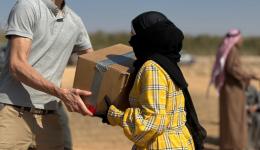
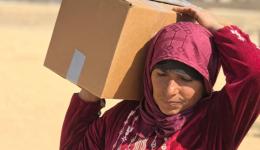
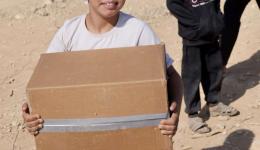
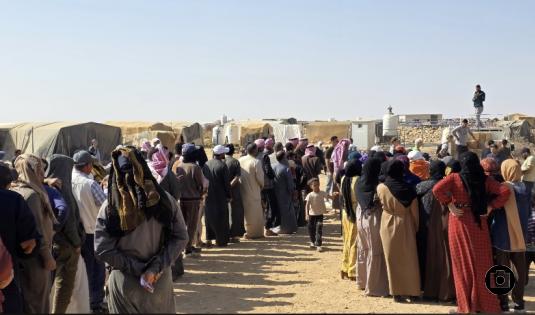
In preparation, 600 food packages were assembled at a cost of €35 per package. In addition, 29 families who have been particularly hard hit by fate were selected in advance. We will visit each family individually.
Day 1 – November 9, 2025
Refugee Camps Almafrag and Amrahomera
50 families each – approx. 580 people
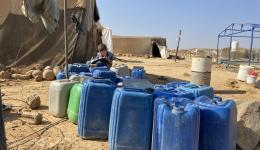
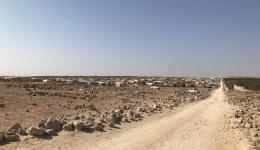
The camps are located in the middle of the desert and are supplied with water and electricity only on a makeshift basis by local farmers. Each family pays €26 per month for this. Those who are able to work labor in the farmers’ fields for about four euros per day. Each of the 100 families receives a food package.
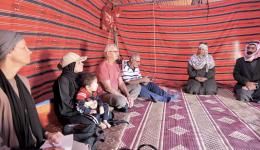
We then visit families who are particularly vulnerable. They receive additional support to help cover ongoing costs for water, electricity, food, medicine, and more. Examples include:
-
Family 1: A mother with six children. Three of the children were born with disabilities and can only walk with difficulty.
-
Family 2: Living in the camp since 2011. Of the three children, all born in the camp, one girl is blind. The family receives €100 per month from the Jordanian government, but €50 alone is needed monthly for medication.
-
Family 3: Living in the camp since fleeing in 2014. Six children; the mother suffers from cancer. The father died in an accident, one older brother was killed in the war. Another child has a deep wound on the back that will not heal.
On this first day, we also visit an orphanage. Mothers live here with their children, who at least receive afternoon schooling. All fathers were killed in the war. Two of the mothers have prepared games for the children to play with us visitors. There is great joy among the little ones. Each family receives a donation to make life a little easier.
Day 2 – November 10, 2025
Refugee Camp Ghadiu Al Nakah
150 families – 800 people
We distribute 150 food packages and visit nine families. Some examples:
-
Family 1: A mother with five children; the father died in 2015. Four of the five children are mute and unable to speak. The mother works in the fields.
-
Family 2: A family with eight children. A 15-year-old boy is incontinent and needs diapers. Surgery in the USA had been approved, but funding was frozen due to the declared end of the war in Syria. The father works on a farm for a few dollars a day. In Syria, they once had a house, a car, and jobs. He also lost two brothers in the war.
-
Family 3: A mother with ten children. Her husband is currently in hospital undergoing heart surgery. The mother donated a kidney to her brother and works in the fields whenever she can.
-
Family 4: A father with two children, aged 12 and 14. Twelve years ago, debris fell on his back during a bombing, leaving him paraplegic. The mother left the family. Since then, the 12-year-old son has cared for his father—cleaning, cooking, washing, and managing the household. He loves his father deeply. The 14-year-old daughter attends school; the son cannot, as he must manage the household. The family receives €100 from the state—rent alone costs €100. They survive only through help from neighbors.
-
Family 5: A family with four children. The father is severely traumatized by the war and barely sleeps. The mother, her sister, and the eldest son work in the fields. They occasionally receive food packages from friends.
-
Family 6: A mother with six children—three girls and three boys. Living in the camp since 2013. The father was severely traumatized and died of a heart attack. Two sons of her mother-in-law were killed in the war. Returning to Syria is impossible; everything is destroyed.
These are just a few examples of the families we visit.
Day 3 – November 11, 2025
Refugee Camp Altfjahah
20 families – 100 people
Once again, we distribute food packages and visit families.
-
Family 1: Seven children; one child has cerebral paralysis. They have been in the camp since 2016 after a bomb hit their home. The father works in the fields despite severe back pain. The mother is currently in hospital.
-
Family 2: Six children. The eldest was severely traumatized during the flight—memories of bombs, planes, helicopters, paralyzing fear, no food, and hardly any water. They have created a small garden on barren ground to grow eggplants, tomatoes, and cucumbers.
-
Family 3: Five children. Seven-year-old Amani has cysts throughout her lungs. Michael, our doctor, reviews the X-rays and immediately consults a colleague. It is clear that two further surgeries are necessary. FriendCircle WorldHelp will cover the costs.
-
Family 4: A 100-year-old woman who fled Syria with her family in 2012. She lives in the camp with her daughters and grandchildren. Her youngest daughter’s husband works on the farm of a Jordanian landowner. Her five sons have returned to Syria to help with reconstruction. We ask her about the happiest day of her life: it was her pilgrimage to Mecca, where she prayed. Her greatest wish is to return to Syria to die there. Her secret to long life: milk from the cow every day and lots of vegetables.
-
Family 5: Four children—two boys and two girls. Both girls require dialysis two to three times per week at a cost of about €400 per week. An organization provides some support. The father works in the fields with the two sons to raise the remaining money. A very тяжел fate—sadness is clearly visible in the girls’ faces. Here, FriendCircle WorldHelp also reaches its limits.
-
Family 6: Nine children—five girls and four boys. The family fled the war in 2011. Five children were born in Syria, four in the camp. Two children suffer from anemia and require blood transfusions every 15 days at a cost of €240. The family must pay €120 themselves; a local organization covers the rest. Both parents and the children work on a farm. As with most children in the camps, this means no schooling and therefore very poor prospects for escaping poverty.
Day 4 – November 12, 2025
Refugee Camp Omalgmal
150 families – 700 people
We again begin by distributing 150 food packages—one for each family.
We then visit families who were carefully selected in advance:
-
Family 1: Six children. The father is severely ill, requires artificial feeding, and suffers from a serious traumatic brain injury. We provide financial support to ease the immediate hardship.
-
Family 2: A 35-year-old woman with five children. Her husband died six months ago in a traffic accident in Syria while trying to visit his parents.
-
Family 3: A severely ill woman lives in the camp with her three adult sons. The young men work on a farm. The father has died.
-
Family 4: A mother with five children—three sons and two daughters—living in the camp since 2016. The eldest son, who helped the mother significantly, was forced to leave the country after being denounced. The husband died in Syria in 2011, before the war, due to illness.
-
Family 5: A mother with nine children—five boys and four girls. The family fled Syria in 2011 when all men were to be conscripted. The husband died of cancer six years ago. They struggle daily to survive.
Work in the Farmers’ Fields
When work is available, many refugees—and their children—work on the farmers’ fields. The day is extremely hard. Work begins at 7:00 a.m. and ends at 6:00 p.m. Workers must bring their own food and receive only water. After three hours of work, there is a ten-minute break, followed by another three hours, and so on. Cars regularly drive past the fields to check that people are working. Daily wages range between €6 and €9.
© Copyright by FriendCircle WorldHelp. All rights reserved. Any further processing, re-publication or permanent storage for commercial or other purposes without the express prior permission from FriendCircle WorldHelp is prohibited.